The 1939 Parker Vac Imperial
Parker Imperial
Year:
1939
Description:
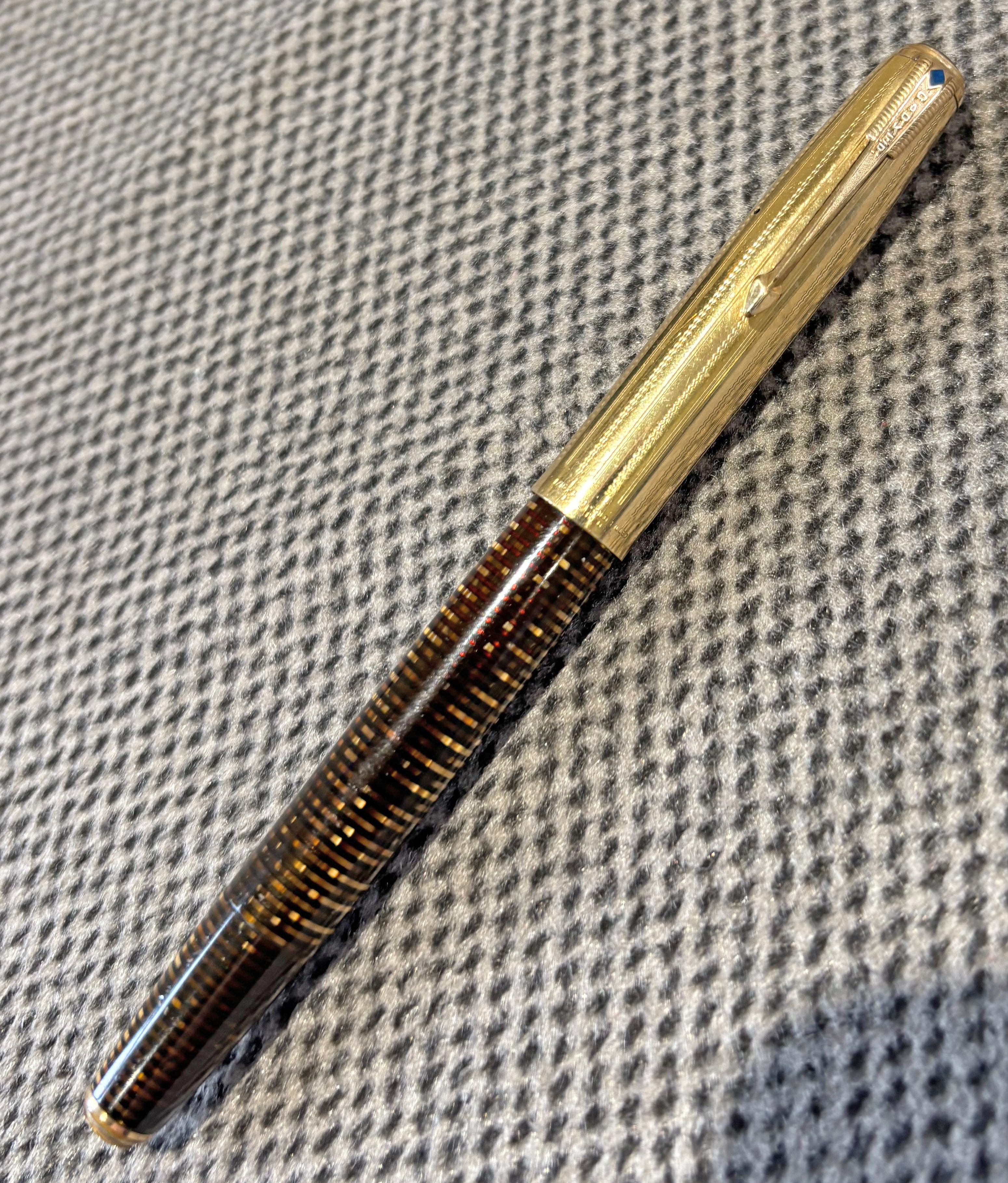
The Parker Vacumatic Imperial gets a mention in Lambrou’s ‘Fountain Pens of the World’ and the web Parker Penography entry gives an excellent summary under its Vacumatic section. A comprehensive description will be found in the Shepherd/Zazove book on the Vacumatic where the range is detailed - including a 14k gold bodied Consort. The pen was made for a little more than a year through 1939/40 and quickly disappeared in 1941 as the 51 was launched.
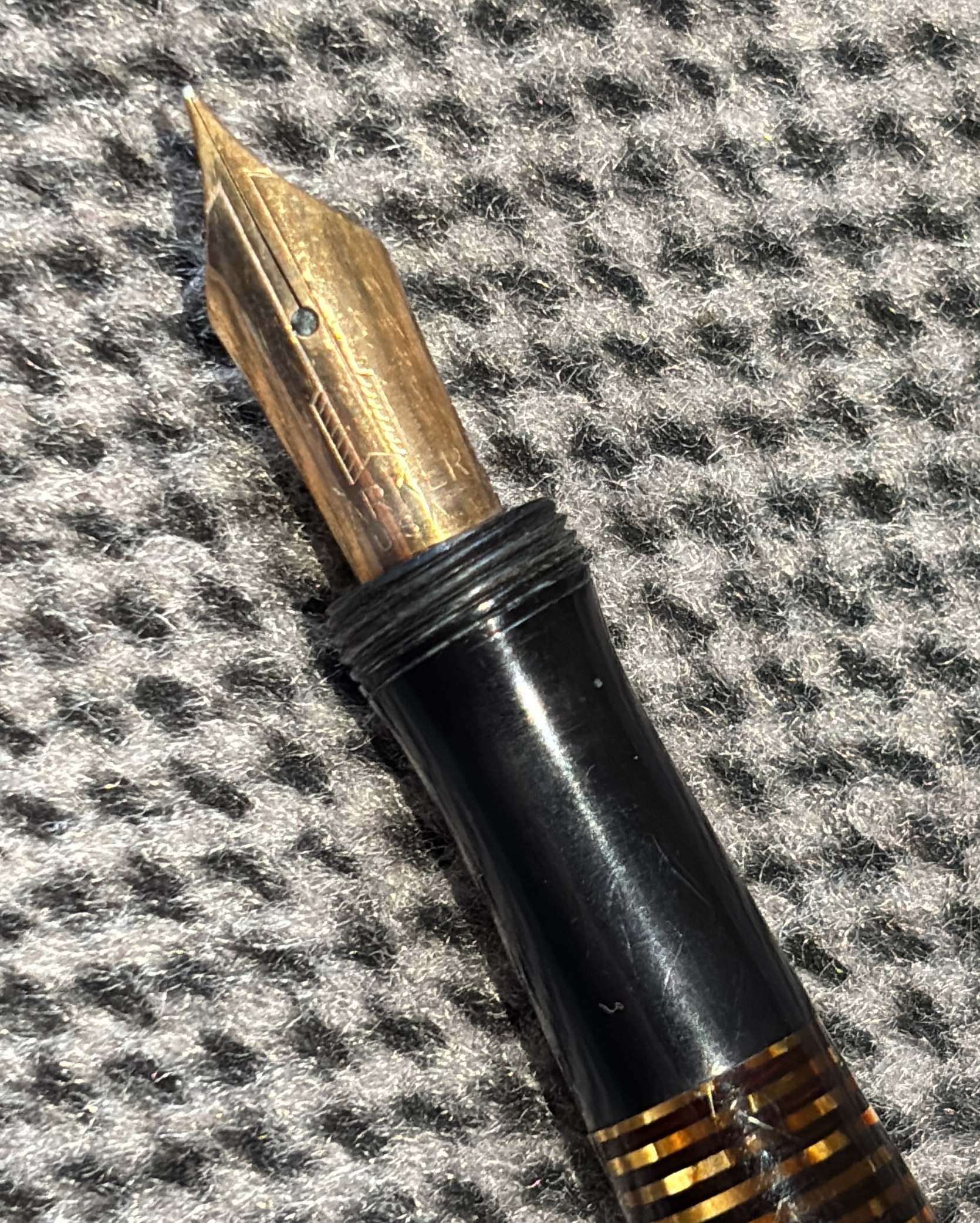
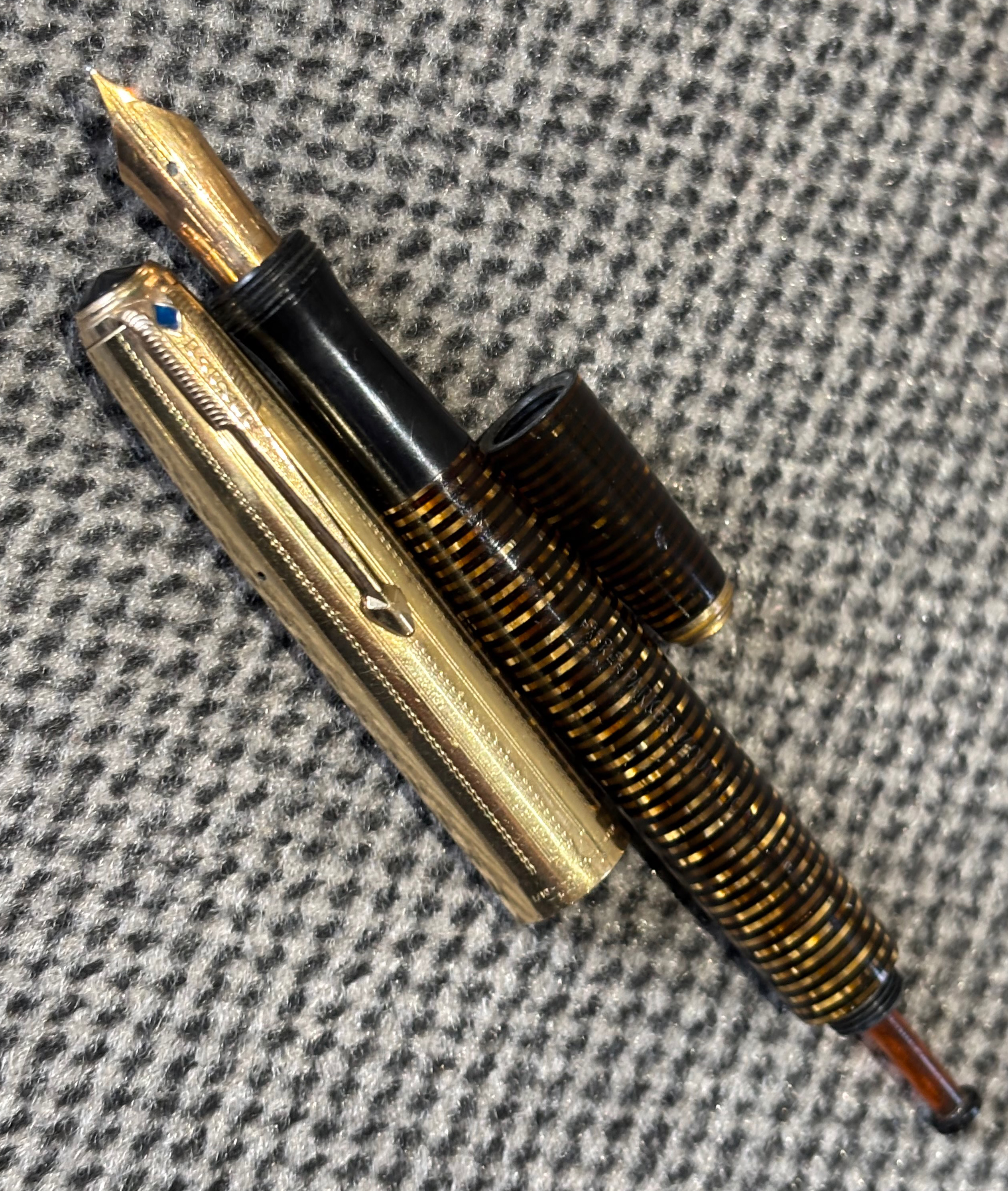
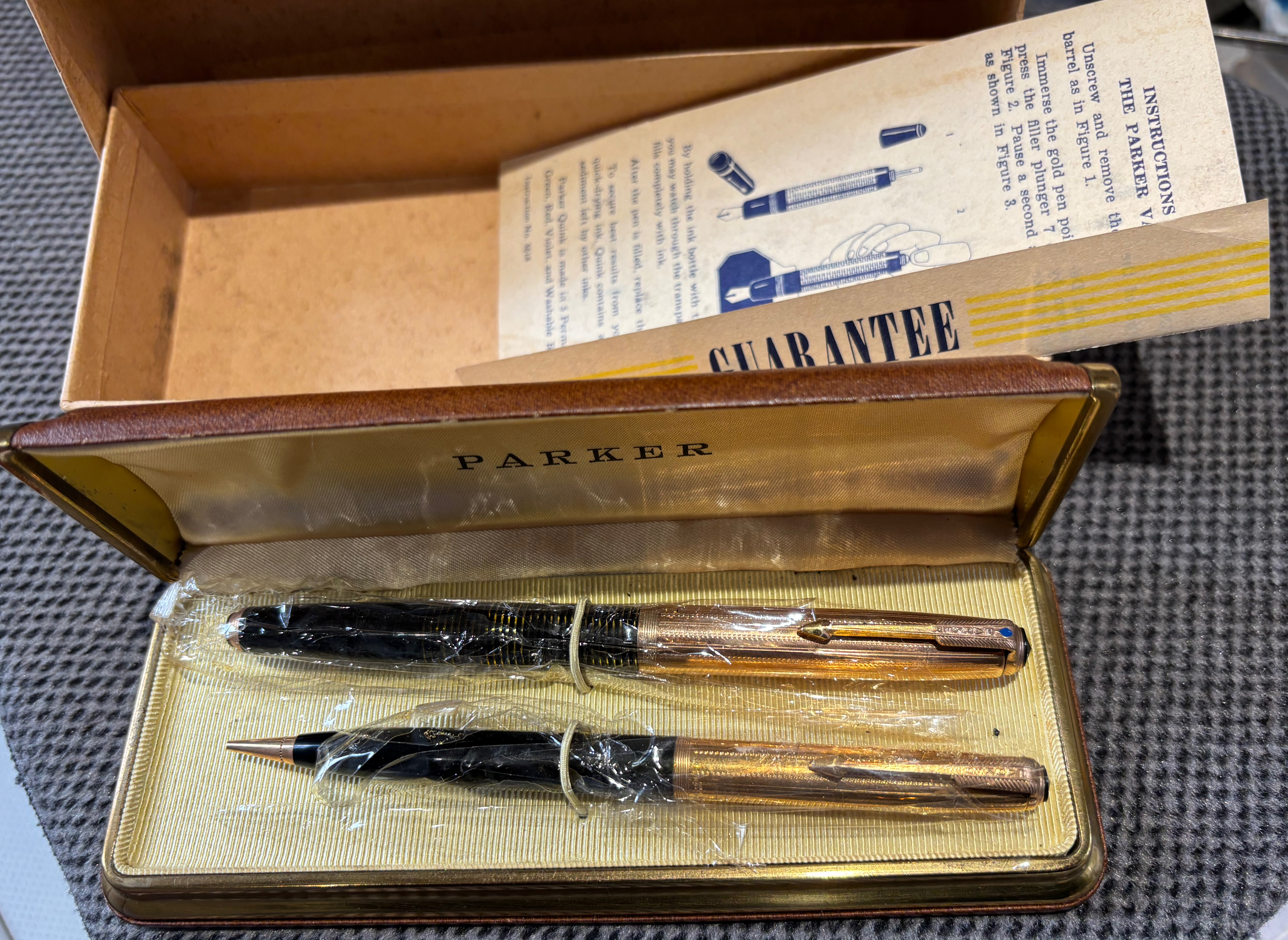
In the photographs the single gold pearl example photographed is dated 1940Q3. The vac pump has been changed. It should be aluminium Speedline. The pen and pencil set is black, dated 1940Q2 from Canada, also shows all the packaging with which it was originally supplied. The set is an extraordinary, never filled survivor and has full production clarity in its clear barrel bands.
Around 1938/39, the Vacumatic was getting long in the tooth. Two barrel patterns were issued to rejuvenate sales. The innovative, detailed celluloid of the Golden Web came in 1936 and the Shadow Wave in 1938. The Vacumatic range ceased US production in 1948.
Examples of 1939 Parker Imperial are hard to find. It remains a bit of a surprising odd ball to collectors who see it for the first time and viewing the barrel thread on the front of the section instead of its more usual position on the barrel itself.
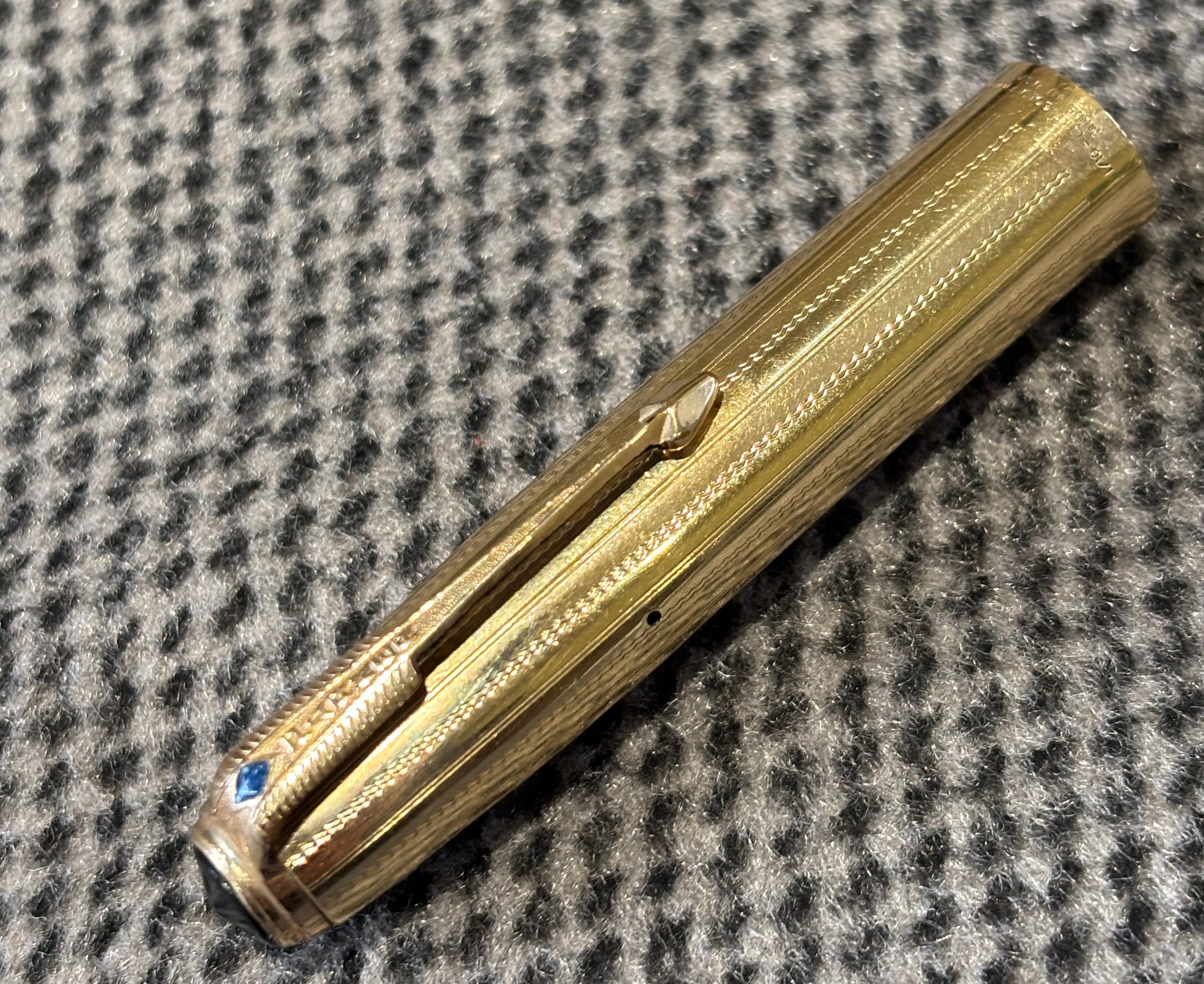
Seeing an example, you could be forgiven for thinking that it is a Gold Pearl Vacumatic onto which someone has mated a 51 cap. In practice, this looks to be closer to the truth than you might think – and with good reason.
In 1938-40, Parker resources would have been preoccupied with preparing manufacture of the 51. Its several novel features would have needed development with specialised tooling and machine tools. Some of these would have had high initial cost and lead times of weeks or months especially if hardened materials are used to survive the anticipated production run. Tooling would have had a design and development cycle of its own that can take weeks or months to work through. Think of the forming of the nib, the finely finned collector to be machined from Lucite, the tooling for forming the metal cap with its the clutch spring and the inner cap. At least, the vac pump had been around and short-life features like the lock-down had been sorted out with its longer blind cap and Speedline filler.
Reducing cost is crucial in any manufacturing enterprise. Seconds spent on any single work operation may be unimportant to members repairing pens today but, in production, add up to become part of the item factory cost and then retail purchase price. The process of moving from prototype and development into full-scale production is not quick, easy or inexpensive. Trade-offs have to be made as production engineers get to work. Risks are evaluated and decisions taken that can turn into expensive mistakes. Think of the 51 Red Band and the service costs of the 61. The 51 gave the Parker production team several problems to solve.
It is into this environment that the Imperial needs to be viewed. The Parker 51 cap tooling would be long lead with its hardened press tooling. Proving it on the Imperial would have been a great way to de-risk at least this item. Looking at the Vacumatic book, the production team not only checked out the gold-filled cap engraving and labelling but also made the Empire Cap design for the Imperial Ensign that reappeared shortly after on the 51.
By this time, the 51 cap would have been known to be push on so there was the added challenge of making the 51 cap shell fit the Imperial Vacumatic body. There was not enough room to get the cap threads near its open end if it was to have a sleek profile. Can you imagine the discussion in the Design Office? ‘Why don’t we move the cap threads down to the other end of the Section? There is room further down the cap for a an inner cap containing the thread’ followed by ‘Draw something up and show the production team’ and ‘Make some samples in the Model Shop for Mr Parker to see’.
That is my vision of how the decision might have been made. Extra vent holes would have been needed in the cap to equalise pressure as the cap was unscrewed and the production team would have viewed this as quickly and cheaply accomplished.
So, we have the short production life of the Imperial Vacumatic, a commercial bridging and production de-risking operation as the 51 moved into the most successful production run in writing history. The result is a pen that is hard to find and with top end versions that are beyond rare.
This item is for your interest and enjoyment and is not for sale.